mineral
dream
(2025)
This project was comissioned by Leveld Kunstnartun. LKT AiR is funded by the Norwegian Ministry of Culture, Buskerud Fylkeskommune and Ål Municipality.
/
EN | PT
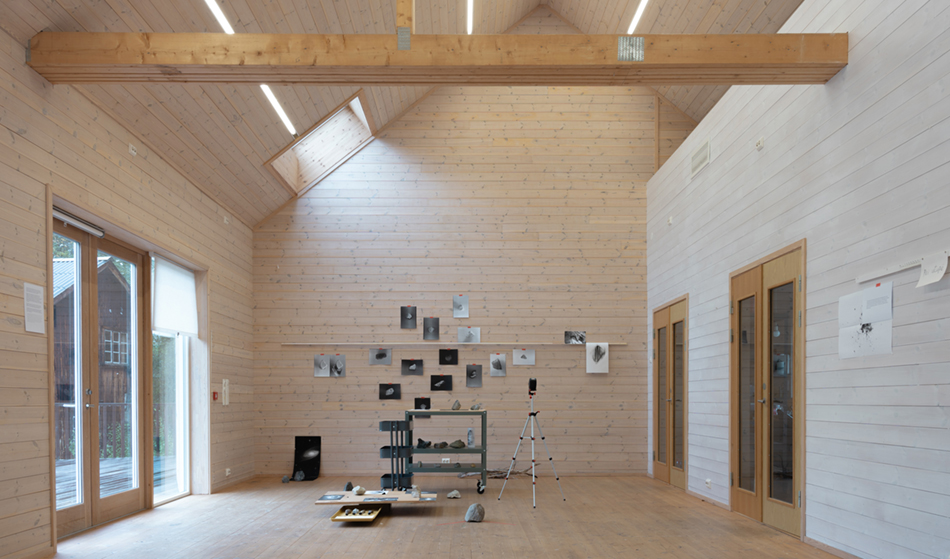
Mineral Dream | 2025
Installation view | variable dimensions
This project delves into the profound dream cosmology of the Yanomami * people, exploring a world where the boundaries between the mineral, the spiritual, and the oneiric are porous and fluid.
In Yanomami cosmology, night was born from the hunt of Titiri, the mutum bird, whose darkness first allowed humans to dream. Dreams are not mere illusions but journeys of the pei-utupë (the vital image), where the self wanders beyond the body to meet ancestors, spirits, and the unseen layers of the forest. Yet here, under the Norwegian summer’s relentless sun, night retreats. Darkness dissolves. Sleep grows thin, and dreams fray at the edges.
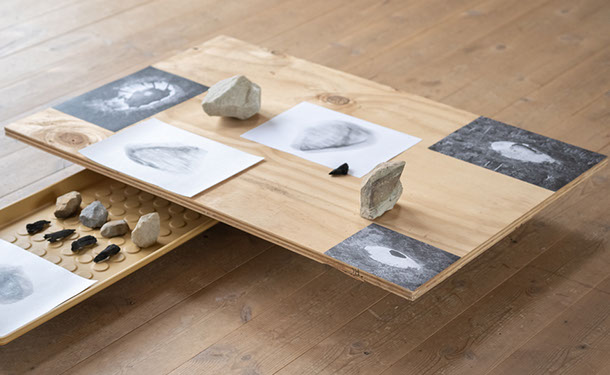
Mineral Dream interrogates the fragility of dreams when severed from darkness. Through charcoal drawings, I trace stone forms found in the landscape—their edges blurred like half-remembered utupë, resisting focus. Sound installations weave nocturnal field recordings (wind in birch trees, owl calls, river whispers) with spoken fragments of local dream narratives, gathered in conversations with inhabitants. These testimonies become echoes of the Yanomami belief: that to dream is to know, and without night, we risk losing more than sleep.
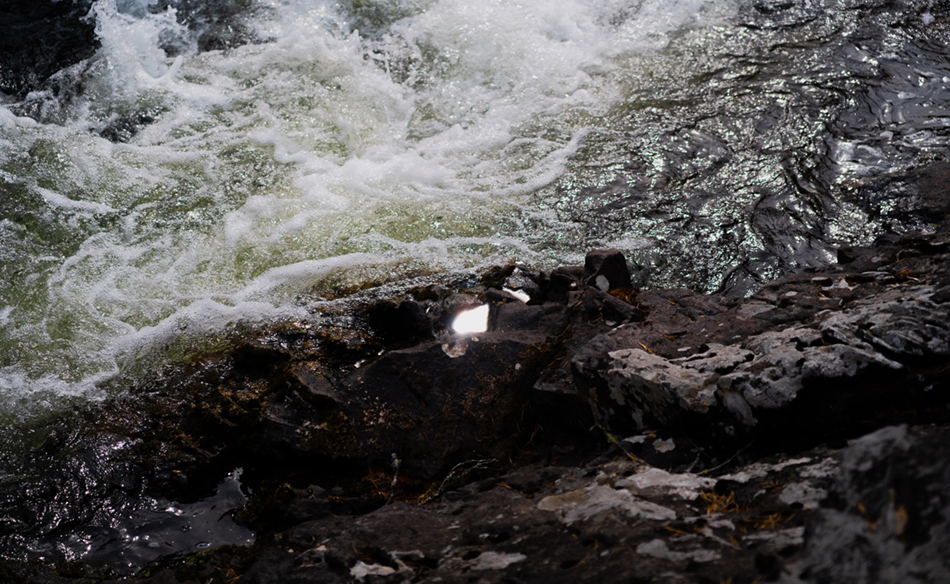
By walking the twilight borders of this luminous landscape-capturing video at midnight when the sun still grazes the horizon-I seek the residue of dreams in a world without true night. How does the pei-utupë manifest when darkness never falls?
* The Yanomami, also spelled Yąnomamö or Yanomama, are a group of approximately 35,000 indigenous people who live in some 200–250 villages in the Amazon rainforest on the border between Venezuela and Brazil.
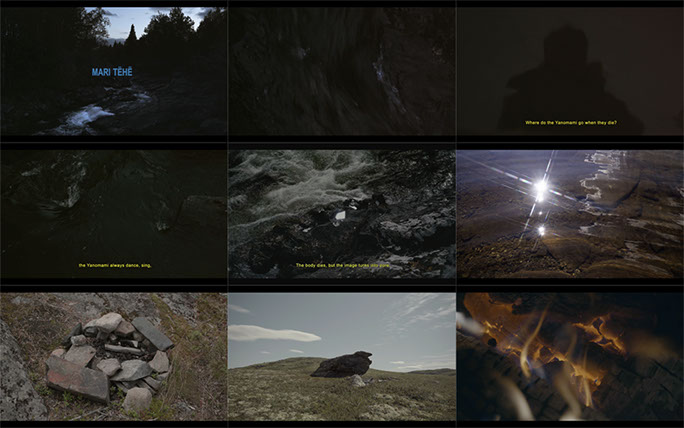
— Where do the Yanomami go when they die?
— To the ‘hutu mosi’.
— And where is the ‘hutu mosi’? Have you ever been there?
— I've been there in a dream. The ‘hutu mosi’ is in the sky, it seems far away, but it's close. It's beautiful, there's plenty of food, the Yanomami always dance, sing, the women and men become young, they're always adorned. Everyone lives happily in the hutu mosi.
— How can they live happily if they're dead?
— The body dies, but the image turns into pore. They're pore, but they still live.
The image that turns into pore when a person dies is the part of the person that detaches from the body when they dream. In the Yanomami language, it's called ‘pei utupë’. It translates as the image that all beings have inside them. ‘Utupë’ can also be a reflection, a shadow. Thus, the image seen in the mirror is an ‘utupë’, just like a photo, an image seen on TV.
For a Yanomami to die, all the parts that make up the person must be destroyed.
— What do you white people do when a relative dies?
— We bury them.
— Do you put your dead underground?? Do you let them rot alone?? How can you do that??
— That's what we do with our dead. Sometimes we cremate them, just like you Yanomami do.
— And what do you do with the things that belonged to the dead?
— We leave them for our children.
— How can you leave the things of the dead to the living? That way, the living will look at these goods and will not be able to forget the dead, and they will suffer. You white people, you really are another people!
Mari Tëhë | 2025
Video still | 16:9 | 4’39” | colour | sound
Mineral Dream | 2025
Installation | variable dimensions
Mari tëhë (from the Yanomami ethnic group) refers to the dimension of dreams, where time does not occur linearly, but can be accessed and transformed continuously. Mari tëhë refers to a time, but also presupposes a space; and therefore, it can perhaps be translated as a space-time that is always in constant movement.
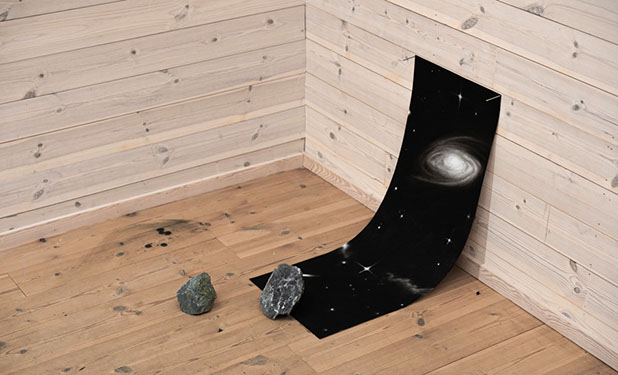
Mineral Dream | 2025
Installation detail | charcoal on paper and stones variable dimensions
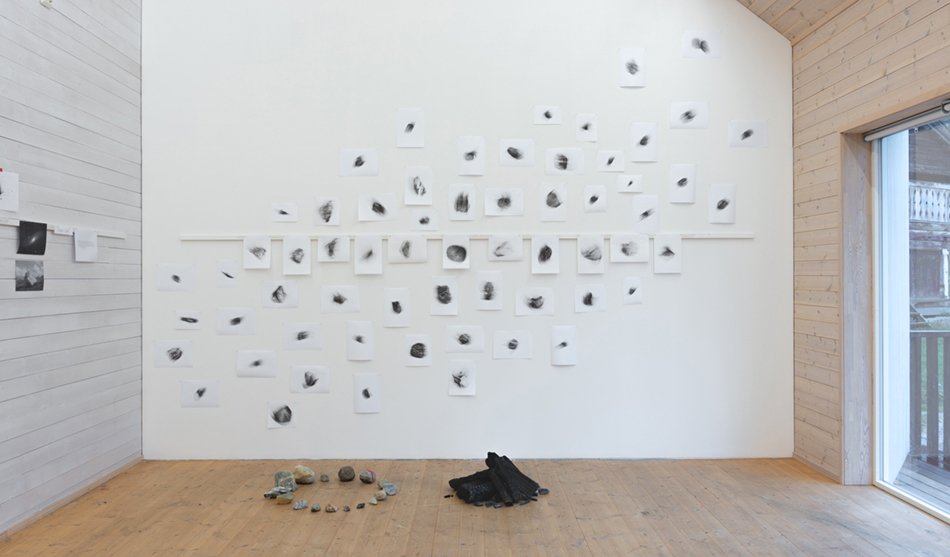
Utupë | 2025
Installation view | 63 drawings, charcoal and stones
variable dimensions
Davi Yanomami showing the King of Norway, Harald V, how they hunt in the forest.
(Regnskogfondet / Norge)
April, 2013
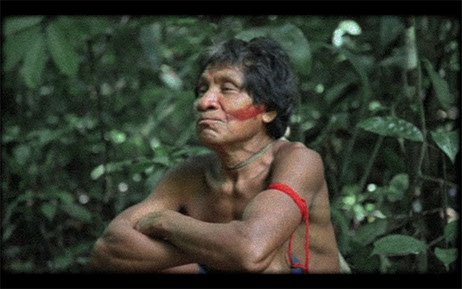
King Harald V of Norway accepted Davi Yanomami's invitation and spent four days in 2013 in the Watoriki community (Demini) which is located 150 km west of Boa Vista (Roraima). He enjoyed the convivial experience which he defined as something "wonderful".
King Harald V's desire was to get some real life experience in an indigenous community living in the tropical forest, to share the everyday life of its inhabitants and to be able to take some part in it. He saw his dream come true thanks to the invitation that Davi Yanomami gave him to participate in the twenty-year anniversary of the recognition of Yanomami Indigenous Land which was held in Watoriki village in October 2012. Because of a busy agenda, this visit took place only in April.
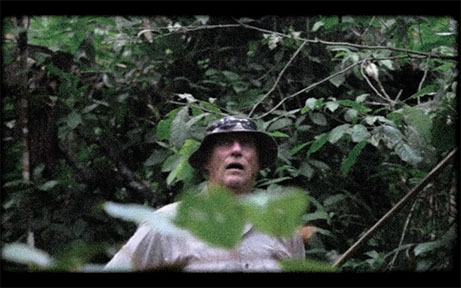
Allowing the King to visit a Yanomami community with a restricted delegation, without putting his security at risk, required a particular effort from the Court and the Norwegian Embassy in Brasilia. Through the Itamaraty, the Funai and the federal police, the Brazilian government has been made aware of the situation and offered its support to ensure the monarch's safety and respect his privacy since it was not an official visit.
King Harald V hearing the sounds
of the tropical forest. (Regnskogfondet / Norge)
April, 2013
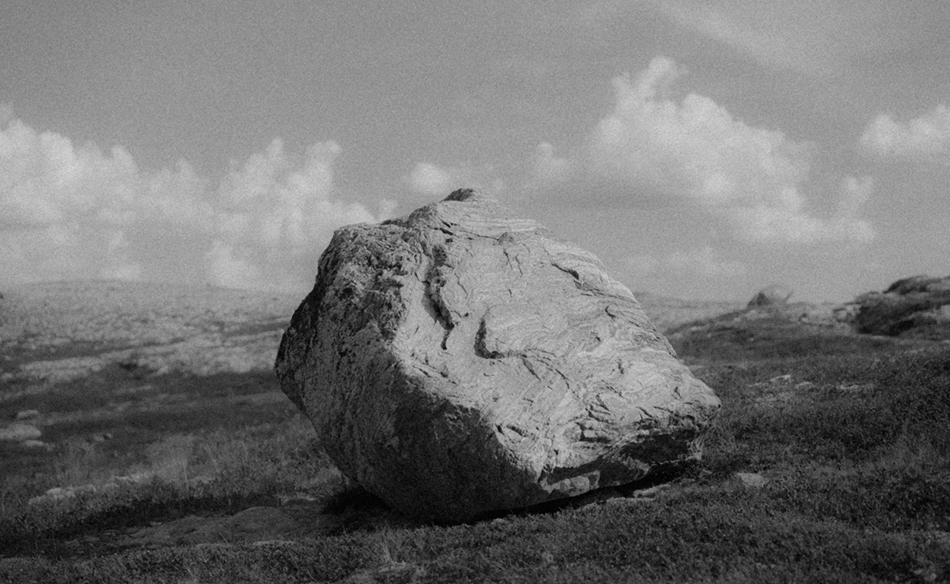
Mineral Dream | 2025
Installation detail | Photograph on paper
28 x 19cm
Mari Tëhë | 2025
Video stills | 16:9 | 4’39” | colour | sound
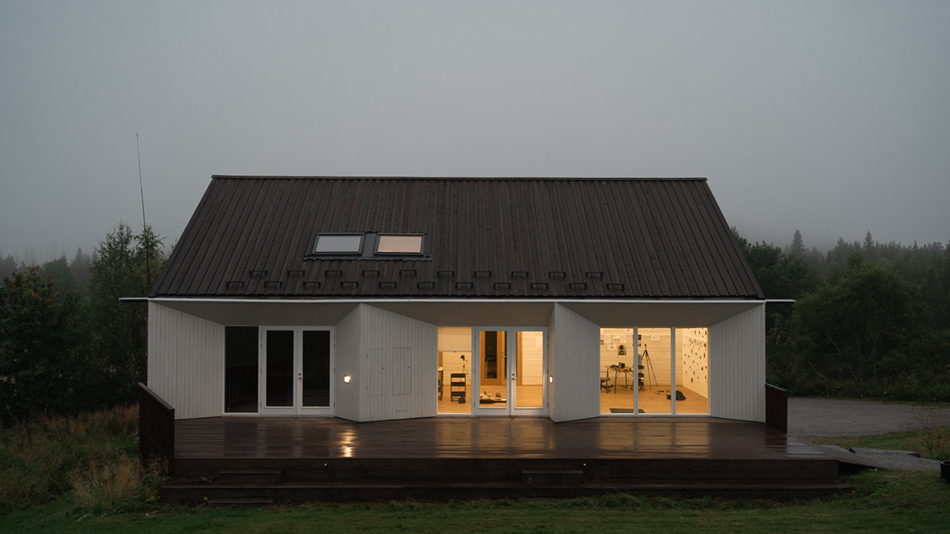
Studio in Leveld Kunstnartun | Ål, Norway
September, 2025